about Natalie
Who I am

I am a queer, non-binary, and AuDHD therapist in Grand Rapids. I’m notoriously bad at writing anything non-technical, so here’s my attempt at summarizing my personality and how it influences my work:
I love using humor, niche internet memes are my favorite and will be used; the weirder, the better!
My special interests include skincare (I used to have pretty severe acne which kicked this off), meteorology (fun fact: my first major in school was meteorology but I got scared away by having to take four years of physics), Phoenix Wright: Ace Attorney games (I see autistic lawyer character, I attach to autistic lawyer character), and dinosaurs/ancient life forms, mainly crocodylomorpha.
Hobbies: drawing/virtual art, mainly character design and birds, swimming (I was a competitive swimmer growing up and I love the water), and gaming (top games/series: Stardew Valley, any Legend of Zelda, Etrian Odyssey, Phoenix Wright, Baldur’s Gate, Animal Crossing, Fire Emblem, and Pokemon). I play the violin and have since 6th grade, though have taken a pause on my involvement in the community symphony I was a part of. I play DnD, where my current character is an ace, non-binary bard to throw the stereotypes. Also learning weird science facts, if that counts? I’m almost always learning :)
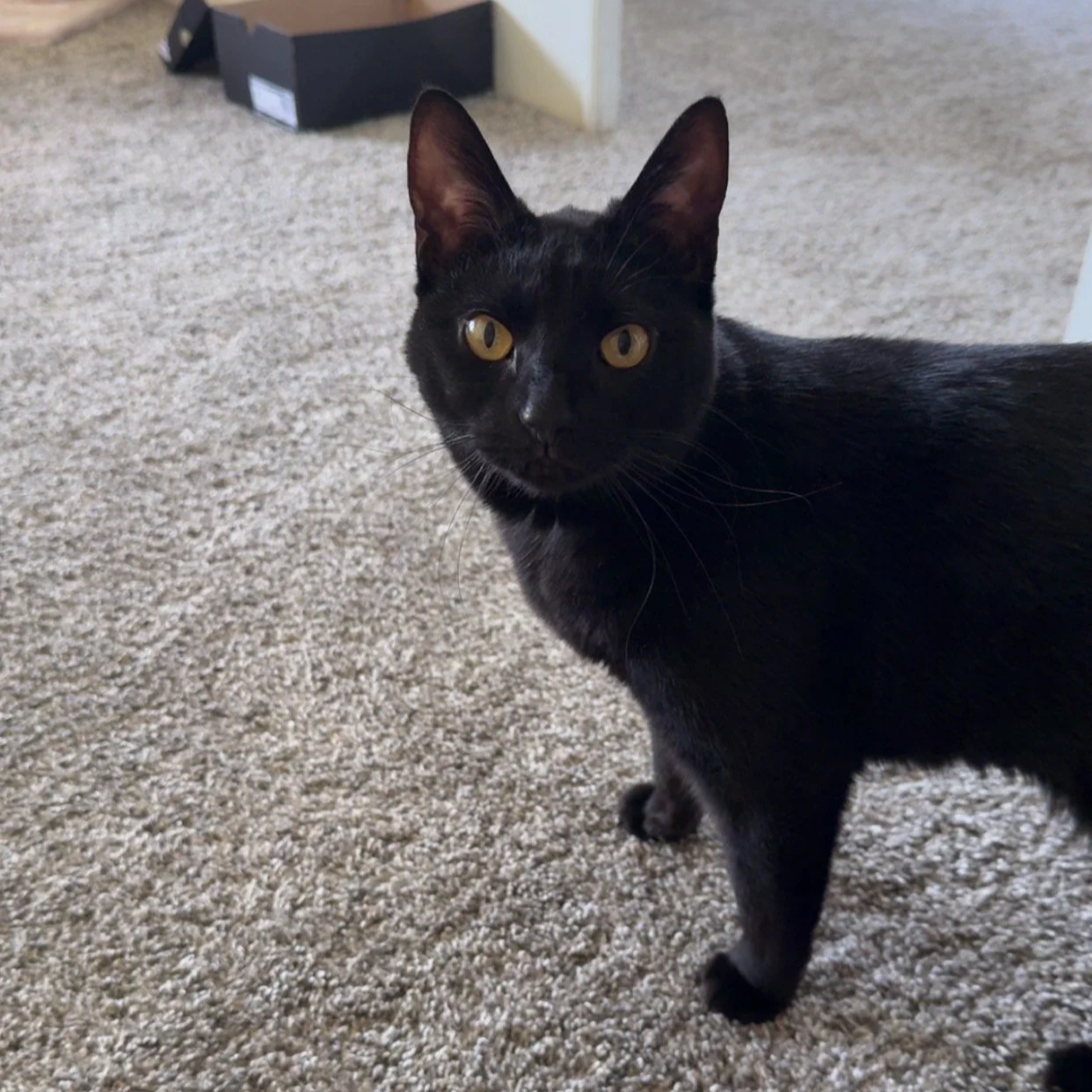
I currently have a black cat named Jiji who will occasionally make an appearance if seeing me virtually! Her name comes from Kiki’s Delivery Service, a Studio Ghibli movie. She has the biggest ears ever and they look identical. I deeply love animals and their meaning in people’s lives, considering their presence as important as peoples.
Specialties and Approaches
At this time, my specialties include PTSD, trauma, neurodiversity, and LGBTQIA2S+ care for ages 12+. This can include topics like:
Complex PTSD presentations as a result of neurodiversity and/or childhood trauma
Difficulty navigating relationships as a result of different communication styles/family or social conflicts around identity
Support in a world not built for complex identities or systems that oppress diversity
Building coping and mindfulness skills to address symptoms or difficulties stemming from intersectionality
Learning how your brain works at a neuroscience level
Create self-compassion and acceptance through knowledge
Manage symptoms in healthier ways

Approaches:
General Information:
I often warn potential clients that I am a challenging therapist. While I am there to support you, I am also there to help you grow and learn. This doesn’t always sound like what you want to hear, constant validating, or only comforting. Sometimes this means (kind) challenging, confrontation, and conflict. If this does not sound like what you are searching for, I am probably not the best fit for you. Also, as a neurodivergent practitioner, I tend to not sit very still, listen with my ears not my eyes, and may not pick up on social cues.
Interpersonal:
I utilize an interpersonal style of therapy, meaning the therapeutic relationship is used as a model for other social relationship patterns one might be exhibiting. This may look very “meta”; naming when there is tension in the room, identifying how you feel about me, uncovering avoided topics, etc. are at the root of this approach. This can feel straight forward and uncomfortable; getting comfortable with discomfort is the goal.
IFS/Parts Work Informed:
IFS/”Parts” work is breaking down yourself/aspects of personality into different parts that play different roles at different times. Have you ever felt multiple ways about something, or that spiraling often includes a cacophony of yourself arguing with yourself? Those are multiple parts trying to interact and play their roles. I find this helpful for trauma and neurodiversity because it allows and accepts complex emotions to exist together and embrace varying purposes.
Acceptance and Commitment Therapy (ACT) Informed:
This approach is about building mindfulness around decision making, finding where there is opportunity to make active choices. Choices are made based on personal values and guiding preferences, but also includes mindfulness and acceptance of limitations, recognizing challenges in decision making, and decreases polarization between “right” and “wrong” choices. This can be helpful for decreasing impulsivity with neurodiversity, decreasing black and white thinking leading to inaction, increase personal empowerment, and finding choices that feel good.
Client-Centered:
Client-centered therapy is exactly as it sounds: client’s lead the session. I will not know what you want to talk about if it is never stated, and I like this approach because it encourages self-advocacy. This doesn’t mean I’ll leave to to drown or never speak, but it is me trusting that you will be an active participant in your own care. Outcomes in therapy are based in two things: therapeutic rapport with the therapist and how much you are dedicated to your own process. You will not get out what you do not put in. Also, this is the most trauma-informed approach, where the golden rule is to not go digging around until the client is ready; this prevents unnecessary triggering or possible re-traumatizing.
Psychodynamic Informed:
Yes, the origin of this is approach is Freud. No, I do not like Freud. Modern day psychodynamic therapy approaches are essentially: did your childhood play a role in your current concerns? I often times think present concerns have past origins (related to attachment theory below), and uncovering some of these experiences, memories, or other world view building blocks can give informed insight into current change.
Attachment Informed:
Attachment based therapy approaches also keep childhood in mind, but within the specific context of social relationship attachments. You may have seen this theory floating around on the internet, where one’s damage with attachment figures in childhood create certain “faulty” (though TLDR: all behavior makes sense and nothing is faulty) attachment styles later on; this can make it hard to have healthy attachment to important figures in adulthood. Attachment styles within this theory are: Secure, Anxious, Avoidant-Dismissive (Avoidant), or Avoidant-Fearful (Disorganized).
Feminist:
A Feminist based approach is one that keeps in mind sociopolitical climate, intersectionality of identities, systems of power and oppression, socialization, culture, etc. Often times, people do not have a clinical concern, they have an environmental concern, and their “symptoms” are an appropriate response to discrimination, systematic powerlessness, socioeconomic disadvantage, cultural erasing of identities, etc. Therefore, this person might be anxious, but it is not a problem about their coping or mental state, but about the world at large around them inducing anxiety.
Cognitive Behavior Therapy (CBT)/Dialectical Behavior Therapy (DBT):
These are tried and true methods in the therapy space. CBT is known for observing how a person’s thoughts on events alter emotional responses. The idea here is that people fall into thought patterns that are non-functional mental shortcuts and, by changing these thought patterns, clients can improve their mental state. DBT adds another layer to this, integrating additional mindfulness and emotional regulation skills.
Education and Experience
I am an LPC under the state of MI, license #6401225262. I hold a Master of Science in Clinical/Counseling Psychology from Illinois State University, as well as two Bachelors of Science degrees: one in Psychology and one in Behavioral Neuroscience, both of which obtained were from Grand Valley State University. My experience is an amalgamation of three areas: professional experience, public service, and research.
Professional Experience:
I have been working in the field since 2019, where I began as a Psychiatric Technician and Pine Rest. While there, I worked with At-Risk Youth as part of their treatment team, where I would help with medication, school performance, treatment goals, and be an emotionally supportive and stable person for teens to go to when distressed. I also worked as a statistics tutor for Grand Valley at the time. In graduate school, I both taught Psychopathology and had an internship at a rural Community Mental Health program in Illinois. This internship included providing therapy to a caseload of around 70 clients, shadowing psychiatric/medication appointments, shadowing crisis calls, and shadowing sessions at the state prison/jail in town. Since graduating in 2022, I have worked in private practice, beginning Tobin Counseling for a year, then Epic Discoveries Counseling for two years, obtaining my full license in the process! I have now transitioned to my own practice starting in 2026.
Public Service:
I began public service in my undergraduate degree, volunteering on an Alzheimer unit, assisting in physical therapy skills such as motor coordination, eye coordination, balance, etc., cognitive skills retention, such as memory, visual-spatial coordination, etc. and music therapy. I also hosted men’s coffee club once a week and it was hands down my favorite part! In addition to Alzheimer’s work, I volunteered at the GVSU LGBTQIA+ Resource Center as part of the programming board to brainstorm and implement new programs and clubs through the center. Lastly, I currently host a parallel play group once a month to allow neurodiverse folx in the community find social outlets, share special interests, get needed tasks done, etc. More about the group can be found here: Parallel Play Group
Research:
My research experience began with a laboratory project working identifying possible links of Post-Traumatic Stress Disorder severity to certain dietary intakes, such as Western Diet (high fat, high sugar) and well balanced nutrition. This was done via mice studies and social defeat stress to induce PTSD, measuring brain plasma concentrations of Corticosterone via Enzyme Linked Immnoassays (ELISA) (Fancy talk for: were there higher levels of stress hormones present in mice with PTSD with a western diet rather than just a standard diet?). Citation: Eudave, D. M., BeLow, M. N., Flandreau, E. I. (2018). Effects of high fat or high sucrose diet on behavioral-response to social defeat stress in mice. Neurobiology of Stress, 9, 1-8.
From there, I joined a lab for another two years identifying possible links between ACEs (Adverse Childhood Experiences) to health and legal outcomes. More specifically, my first year on the project was coding psychological evaluations of parents reported by/had an open case with CPS. Information included in those evaluations included parental ACE scores, evaluations between parent and child relations, IQ testing, personality testing, etc. My second year on the project was working at the Kent County court house to link parental experiences to the outcome of their CPS case (such as: were parents with higher ACE scores more likely to lose custody/experiencing mental illness to the level that parental rights must be terminated?). This was by far my favorite project! Publication still in progress. Citation: Dueker, G., Russa, M. B. & Kieliszewski, J. (Under Revision). Child maltreatment and intergenerational transmission of trauma. Off of this project, I additionally hosted a lecture on the subject for GVSU. Citation: Fischer, N.E., Miller, K., Kistler, T., & Dueker, G., (2018, October). Changing the conversation from: ‘What’s wrong with you?’ to ‘What happened to you?’. Grand Valley State University Teach-In: Power, Privilege, and Difficult Dialogues. Lastly, I wrote and undergraduate thesis on the treatment of ACEs from a psychology professional’s role in a treatment team. Project title: “A Review of ACE Interventions”. This included topics such as enhancing parental/familial skills, training, and relations, as well as improving community programs and interventions, such as attachment based interventions. This project has no plans for being published.
Turning to graduate research, I was primary author on a study exploring possible links between conflict and life demands in high stress households on the mental well being of all family members. The unique part of this study was using conflict within context, meaning instead of a base definition of what conflict is, we used what each family’s definition of high conflict was. I also presented this study at the Illinois State University Research Symposium and at the National Counsel of Family Relations yearly conference. Study citation: Fischer, N. E. & Finan, L. J., (in prep). Parental conflict, life demands, and affect: Effects on adolescent well-being. Presentation citations: Fischer, N. E., Finan, L. J., & Arellanes, J. A., (2021, November 3-5). Daily conflict, life demands, and affective well-being: Examination of the family unit. National Council on Family Relations, Virtual Meeting; Fischer, N.E., (2021, April). Daily conflict, life demands, and affective well-being: examination of the family unit. Illinois State University Research Symposium.
Finally, my master’s thesis is titled: “Individual, Child, and Socioeconomic Factors: Effects on Custody Litigation”. My study sought to determine whether extramarital factors (such as parental age, parental gender, child age, child gender, number of children, household income, etc.) impact the outcomes of custody arrangements (shared, sole maternal, sole paternal). My interest in this was essentially: are courts paying attention to family factors they should not be when making custody decisions, such as gender bias, stereotypes based in socioeconomic status, or other areas of discrimination (where guiding factors are ideally child preference, parental capabilities, parent/child relationships, etc.)? Data was taken from various counties in Florida, and I performed a multinomial logistic regression analysis to examine associations between these extramarital factors and custody outcomes. Luckily, I did not find a link, meaning judges assessed were not putting significant weight into extraneous variables when deciding custody arrangements. I’m still in the process of possibly publishing this work, so no citation is available.
Current Professional Society Memberships:
National Counsel on Family Relations
Psi Chi, National Honors Society in Psychology
Phi Kappa Phi, Academic Honors Society